Arcanists are the literal bridge between different kinds of magic…

There are six powerful kinds of magic in the magic unleashed series. Each one taps into godlike powers. They grant abilities that transform ordinary humans into walking (or flying) weapons of mass destruction. Practitioners of these Schools or Spheres of magic can work together, but their spellwork is all but impossible to blend.

Arcanists work with the less powerful ambient magic that ebbs and flows during the bleak times of no magic. Magic users have gone by many names throughout human history, witches, warlocks, magi, and a host of other less-savory titles. These people are bound to the very magic of creation. More women than men are born with arcane affinity.

Through the bleak times, arcanists formed tight knit groups to pass down their heritage from the last magical age. Not all of these traditions survived, or passed down their knowledge intact. Their imperfect understanding of magic has led to many terrible deeds.

Creation is the only means to connect to arcane magic. During the bleak times, destruction is the only means to grasp the smallest sliver of magical power. Human sacrifice tainted some of these traditions. During times of no magic, this is the only reliable means of invoking magic. Which may account for some ritualized murders dating back thousands of years, often couched in religious or blasphemous ideology.

During the bleak times of no magic, many would be arcanists feel the stirring of their power. Without magic, they are unable to realize their full potential. Like all magic users, unfulfilled urges connected to magical power can lead to debilitating mental conditions.

When magic flows into the world, arcanists experience the stirring as a powerful spiritual awakening. By embracing the stirring in their soul, an arcanist can learn to manipulate the practical magic around us all. They are not magical powerhouses like wizards, but they are still potent magic users.

This common or practical magic is less potent than the magic of the Spheres. It is still a potent tool, and the only way to bring other kinds of magic together. They can bind together other kinds of magic in artifacts of great power. Arcane master craftsmen created the most powerful relics of the last magical age.

With the return of magic, many arcanists feel the stirring. Some will still follow the old ways of the bleak times. Others, unconnected to the traditions of those groups will chart a new path. Conflict is inevitable.

Writing is solitary, but it doesn’t have to be!

group of friends hanging out

Granted, the pandemic makes going to your neighborhood coffee shop problematic, but you don’t have to create in a vacuum either. The internet has been a haven for writers for years. There are sites and groups all over that allow us to share our experiences. If there is a group for baby wearing dads who love yoga in public parks, there are surely groups for your particular writing niche.

Depending on your comfort level, you can either lurk in those groups, or really get out there. Sometimes it’s therapeutic to see that others struggle with the same issues. Personally, I like to commiserate when I see someone else dealing with the same thing I am. Or maybe I’ve moved on from that issue but remember well how it felt. Either way, it helps me relate.

For me, the best groups go beyond sharing common problems, or even the solutions we find for those dilemmas. Authors can share their work with each other. I lucked into a great critique group that has helped my craft more than any other single course or group. If you can find a safe place to have your work torn apart and rebuilt, I can’t encourage you to dive in enough.

Another bit of sage advice along the same line, Don’t pigeonhole yourself to your genre. Having people who write the same kind of stories is wonderful, but you’ll learn more reading and critiquing stories different from yours. I find it much easier to see things outside of Fantasy or Science Fiction than I ever expected.

My last point about the goodness of critique groups is not taking the criticism as a personal attack. I’ve been in groups that focus on grammar and mechanics, which you certainly need to master. More important though, are methods of craft and storytelling you won’t get from any other source. None of that should be aimed in such a way that you want to delete your words and stop writing. I came close to that more than once.

Writers can be cantankerous lot when it comes to others work. You either need tough skin to withstand peer reviews, or learn to let that criticism run off your back like the proverbial duck and water. No matter what, don’t let critiques beat you down. It takes time and practice to write well, no matter what your ninth grade English teacher told you. Keep at it. Your story is important, and no one else can tell it (or show it) with your unique voice.

I’d like you to meet, Virginia “Ginny” Allan

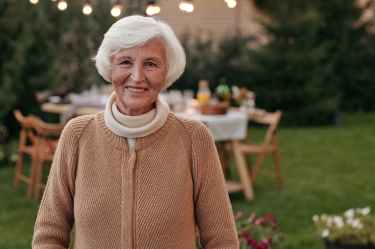
cheerful senior woman smiling in backyard

You won’t meet Ginny right away. She’s already passed away by the time we catch up to her husband, Herbert Allan. Even after her death, Ginny has a powerful impact on the world of Fantastic America. She was a force of nature in life, it only seems appropriate that she’d still influence those who knew her.

Our first impression of Ginny comes from Herb and his devotion to Ginny after the fact. That barely scratches the surface of this woman who lied life on her terms, and not those dictated by society. Ginny is a founding member and fierce advocate for Henry Raft’s posthumous League of Raftean Explorers organization.

Her leadership over all things Raftean comes from years of field work between 1957 and 1962. She and her newlywed husband championed Raft’s work in the field of unexplained phenomena. Ginny accompanied Raft on expeditions to Mexico, Central America, and South America before his untimely death. She spearheaded the creation of L.o.R.E.’s national conventions in order to expand the organization and give it academic credibility.

Ginny was president of the League from it’s inception in 1972 until her retirement in 1998. She remained active on convention panels until 2008, due to failing health. Considered one of the foremost authorities on out of place artifacts in Meso-America. Many American universities require reading her papers on Olmec, Toltec, and early Mayan archeological sites.

Ginny’s legacy lives on through her husband, Herbert, their sons, Troy and William “Illium” Allan. Herb has retired from his teaching position at Valparaiso university, but Troy and William are still active archeologists working in different fields of study. Expect to hear more about Ginny in Midwestern Magicians and throughout the rest of The Magic Unleashed series.

Word Count and why it’s important…

assorted books on shelf

Early in writing Fantastic America and the Magic Unleashed series, I struggled with word count. I had no idea what was acceptable or not. What I did know was that the book I’d started had grown exponentially. The word count for the book was already well over 100,000, and I wasn’t anywhere near the halfway mark.

While I tried to figure out what to do about it, I came across a blog post about word count. Imagine my surprise to learn that no publisher in their right mind would take on a 400,000+ word debut monstrosity. Several heart-wrenching edits later, I had a kernel for each of the four books that currently make up the series. Fantastic America hadn’t existed in any form up until then. The ideas I have for the books after the first four were a distant dream at best.

All of that started with word count. There are plenty of articles out there that explain why word count matters so much. Here are a few simple ideas related to word count. Books with longer word counts cost more to print. They take up more room on a shelf in a store. Both of these are reasons for a publisher to pass on your book. For traditional publishing, these reasons alone can stop a book deal.

Here is an even simpler idea. My magnum opus (if I ever write one) will come after years of experience, honing my craft along the way. It will not be my first novel (I hope). So that 400K monster I’d started would have been a mess, unsellable, and likely unreadable. Publishers take a calculated risk with debut authors. Following the genre-specific conventions for debut books is part of that calculation. Exceeding those conventions isn’t just a larger risk it means your book probably isn’t ready for publishing anyway. Some authors can break publishing guidelines, but not with their first book. We have to prove that we can write books that sell before we break the rules.

How Google Earth helps me write…

planet earth

A while back I mentioned maps helping my writing process. When I was younger, I loved pouring over maps. I even covered my walls in maps of places I wanted to visit someday. I still have map books to refer to in a pinch, but that is no longer my go to source.

For years I used MapQuest for planning trips. One day, in the earliest iteration of what would become Fantastic America, I needed a map. For whatever reason, instead of MQ, I stumbled onto Google Earth, and I fell in love right away. I use it extensively in planning, research, and during my writing process.

This isn’t a commercial for the program, but I am going to highlight how I use it. For starters, I can pin locations like a real old fashioned wall map. I can pin point some place in the real world or overlay a location I’ve invented for the story. It even lets me add notes to the pin so I don’t have to remember every detail I had in mind (My memory needs all the help it can get).

Speaking of overlays, I can throw highlighted shapes over the terrain. This has been especially valuable when I had an area of effect to visualize or a large structure that doesn’t exist in the real world. When matched with the topographical features of the terrain overlays are even more helpful.

The Streetview function had been even more useful. With it, I can virtually visit just about any place I need to see at ground level. It drops me into cities, parks, archeological sites and more. Even if the detail isn’t great, I get enough information to search other sources or cobble together a decent impression of the location.

A significant amount of my novels take place in the recent past. Google Earth has me covered! I can look back at many locations at least into the 1980’s with supplemental Landsat or aerial photography. In some cases there is even street level data from earlier Google mapping efforts.

The last feature I’ll mention is the wide variety of pictures, panoramas, and location tags the program hosts for context. Tourists, academics, and professional photographers have plastered high traffic locations with great views of their visits. Businesses, museums, and points of interest have location tags that give me a feel for whole neighborhoods.

Best of all, from my perspective, all of this detail is free. For an author on a budget, or someone who finds travel difficult (me on both accounts), a virtual trip makes the most sense. I don’t know if this will help anyone, but the few times I’ve brought it up around other authors, they found the program extremely useful. I hope you do, too!

Spring is my second favorite season…

pink petaled flowers closeup photo

I love the sense of rebirth as plants come back to life, blushes of color pop up everywhere you look. Seeing people out enjoying warmer weather after a long cold winter makes me smile. Getting out of my house to enjoy the growth and beauty of the world brings me joy, too.

Spring is not my favorite season, although there is plenty to like. Putting away winter coats and clothes, spring cleaning to clear out the house, and enjoying the migration of birds and butterflies. My house sits on the pathway for Monarch butterflies every year.

Still there are things I don’t like, the weather in Spring is rainy. That makes my dogs paws muddy. Which in turn leads to a lot of washing clothes and bedding. Along with more sweeping and mopping than I’ve done since I was in the navy. Springing forward to daylight savings time is annoying, but I’ve dealt with it all my life.

Summer is my favorite season. Life thrives all around us. The weather is less rainy and even when it pours, the rain isn’t always cold. The days are long and the nights are warm. We have a lot of cook outs and bonfires. Swimming is a big past time in our backyard. As is our annual Fourth of July party, which we’ve held even during the pandemic.

So I’m happy to see Spring, but I long for Summer all year. The heat doesn’t bother me, but sometimes the humidity catches me off guard. I’d still rather be warm than cold. So happy Spring to you all, but know I’ll be a little happier still when Summer arrives.