World building is fun, but it’s also work.

woman in blue and white floral long sleeve shirt holding a round shaped puzzle

Creating a new world from scratch is a daunting task. It can be fun, I certainly enjoy it, but it also requires more effort than using an established setting. If done well, a new world can enrich your stories with wonder and depth. There are a lot of questions about this new world, and the writer must answer all of them. Preferably, before those questions come up in any story set in that world.

What is this world like? Is it an Earthlike planet? If not, we only have so many examples in the real world for what it might be like. There are hundreds if not thousands of worlds completely different from Earth in fiction. But if your characters are to be relatable, you have to have some way for readers to connect to this world.

Besides the similarities to Earth (or lack thereof), what makes it different? Are their people there? If so, how are they different from people in the real world? Is there an ecosystem, plants, animals, or other life unlike Earth? If there are people, what does their society look like? Are they more advanced, less advanced, or similar to some time in Earth’s history?

There are many more layers to fill out in building a new world. Social customs, religion, government and secular institutions all play a part in how your world operates (assuming it is peopled). Barren worlds can offer great settings too, especially if your story revolves around surviving hostile conditions. These concepts apply equally to fantasy and science fiction stories. Although sci-fi might allow you to use more technical language in your descriptions.

If some of that feels overwhelming, there are a lot of checklists, e-books, and guides available online to help you work through what your story needs. Keep that in mind too, you only have to invent what you need. You don’t have to spend a lot of money for many of these world building guides, either. It does take some time, but for me, that’s time well spent. Especially if it opens up new material to tell a whole world’s worth of stories.

Why character development is important.

photo of man looking at sophisticated woman

Years ago, I came up with the brilliant idea to write short stories to get attention for my other writing. After many rejections, I asked myself what could I possibly be doing wrong? It turned out I was doing almost everything wrong. My stories were too long and my dialogue was horrible. The descriptions I had were great, but my characters were flat and hard to believe. I could go on but you get the idea.

This was a hard pill to swallow. I still believed (and still do) that what I’d created was as other science fiction and fantasy worlds I’d loved. But I wanted to learn more, so I looked for help online. I found some critique sites and submitted by best work to them. Learning can be a real bitch when you think you’re already good at something. I’m stubborn, but not so much that I won’t listen once I stop pouting.

I found an eBook on a critique site whose title fit my conundrum precisely. At the time, my stories were mostly science fiction. Which is the author’s genre of choice. I still flip through it for advice sometimes, even while writing fantasy. You might want to check out, “The Craft of Selling Science Fiction That Sells” by Ben Bova. It helped me anyway.

And here’s the big take away from that eBook for those of you who don’t want to read it: Readers want to see characters change. Not necessarily change for every character, but definitely for your Point of View character. Readers like to get to know the POV character, to have a sense of why they do the things they do. We love to hate bullies, to sympathize with heroes, and appreciate a worthy adversary.

So in my stories, especially short stories where word count real estate is at a premium, I try to make the POV characters grow, evolve, or devolve as the story dictates. Not all my POV characters are the protagonist. Some character development may show the downward spiral that leads them to make horrible, selfish, or otherwise bizarre choices. Knowing more about what shaped the characters allows readers to understand those choices, even if they wouldn’t make the same decisions.

I’ve written spectacular settings for my stories, far off worlds and nearby neighborhoods. Events unfold to drive amazing stories in those settings. The dialogue between characters could be spot on and drive the action, not just react to what is happening (both have roles to play in storytelling). But if my POV character (only one in a short story) doesn’t change appreciably from the opening scene to the end, my job as a writer is left unfinished.

Plenty of pulp fiction stories didn’t focus on character growth: Tarazn, Doc Sampson, Flash Gordon, and The Shadow. But I’m reaching for something else. When I write a story, I want readers to have a relationship with my characters. I often write a series of short stories featuring the same characters. Those characters should feel like living, breathing people (or whatever they may be) to the audience. That means each story has to advance both the individual plot and the growth of the POV character.

You don’t have to follow this advice for short stories (or novel length stories). To me, character development has been a powerful device in my story telling tool kit. I hope you’ll find it helpful, but if not, that is one of the great things about creativity. We don’t all have to do the same things to make our stories work.

Reading is Fundamental (to writing).

person holding opened book

The more I write, the more it changes how I read. I’m halfway through a book by one of my favorite authors. I’ve been reading the series this book is part of since the 90’s. The first sixty pages or so were difficult for me to get through. Despite being familiar with the setting, characters, and the situations involved.

What changed between the last book in the series I read two years ago and now? My grasp of writing. I’m no master of the craft yet. But I recognize mistakes I’ve made in stories I shared with critique partners in the past. While I try not to write those same kinds of scenes or long passages of tedious details, I recognize them when I read them.

Did those passages pull me out of the story? Yes, for a few seconds as I realized what I’d read. They didn’t keep me from reading on, because I knew there was more coming in the book that I’ve come to love. I wasn’t disappointed. But it has given me a different appreciation of how far my writing has come.

So if you follow any of my advice at all, write. I don’t worry about how it sounds when I first throw it on the page. My muse doesn’t always put the most exquisite prose in my hands to start with. Sometimes it takes finesse to massage the words into great shape. That’s also part of the process. Lean into it, and believe it can be great. Eventually, it will be.

There is so much noise surrounding authors…

We’re constantly bombarded with advice. There are rules that we must learn before we break them (good advice in my experience). Writers have to have a social media platform. We need to build a following (not bad advice either). We have give away at least some of our stories (less helpful). Then there is well intentioned if wildly different advice. It covers editing, querying, hybrid publishing, and a host of duties to self-publish. No wonder so many authors feel overwhelmed.

I’ve sat through dozens and dozens of webinars. I’ve lost track of how many hours of commercials disguised as webinars I’ve watched. Not to mention more online classes than I can remember. Most fell on a spectrum between useful and garbage that wasted my time. I wasted more time than I’d like to think about. The worst of this garbage centered around a cult-like guru. Who, through personality alone, would help their followers do something life changing.

Don’t worry, this isn’t the set-up for another webinar. I have no class to teach. I’m not selling a product that will revolutionize your writing routine. There is no pitch for a masterclass at the end of this post. I’m just ranting about how many of those pitches I endured before I realized how foolish all of it was.

I’ve taken classes, signed up for programs (and cancelled some too). I might not have a finished manuscript without one of those programs. I’m still of the opinion that good online advice is rare. For every worthwhile subscription or monthly membership, there are countless charlatans who only want to make you feel good and pocket some more of your money.

I’ll share an epiphany I had almost a year ago. Before I started the program that helped me finish my debut novel, Fantastic America. I don’t need any of those programs to be successful, and neither do you. The good, the bad, and the ugly programs aren’t the secret to our success, we are. We have to put in the work. We need to learn the fundamental skills to tell good stories. Then our work will (literally) speak for itself.

Bookshelves are lined with tomes from authors who wrote their stories. They jumped through all the same hoops we have before us. Some of them may have taken online classes, some didn’t. Some may be hawking their own process now through a third party or to make a few extra bucks. The truth is, we really only need to practice our craft, read the works of our peers.

Write. Keep on writing until the passion and excitement inside you ripples across the page. Build worlds. Develop characters, instill them with life, hopes, dreams and fears. Show AND tell stories that leap off the page and into the minds of your readers. Our tribe is out there, our audience is waiting, and only we can write what they need.

Summer, as much as I love it, is hectic…

Try as I may, summer still gets the better of me from time to time. Between family outings, errands, and my dogged attempts to stay in my chair, I don’t always win. This week for example, my writing took a back seat to several evenings of grilling, which I love to do. I’ve also been derailed by grandchildren who needed my attention, I also love them, so no way out of that.

But I’ve also been busy writing. My critique group and solo partners had deadlines this week. I’ve taken on a short story, which I was able to write through the first draft at least. And I’m still pitching and querying Fantastic America, which has been my sole focus for so long, I worry about leaving the MS alone for too long.

Besides the challenges summer brings to my writing routine, I’m still trying to read, and help around the house. Though not enough as I’m sure my wife would attest. I have books on my TBR list, one of which I checked out from my local library. Which is now reopened – YAY! My contributions to housework and chores is mediocre at best, but I do what I can to help out.

The pandemic changed a lot of the things I thought were important to me. I’ve discovered a lot of them were habits that I could change, and should. I’m eating healthier, working harder, and planning for bigger, better things to come. Summer just reminds me of things I have yet to accomplish, and why I want to get further down my path.

Mastering dialogue makes good storytelling great.

four women by the bridge

Dialogue can transform a told tale into a dynamic story. Characters come alive, subtle clues fall from their lips, and foreshadowing in the subtlest of ways is possible. Speech between characters can show instead of tell, it can highlight tension, and demonstrate emotional responses. But only if it’s executed properly.

In one of my first short stories, “Renegades of Orion” I failed miserably at dialogue. Readers had a hard time deciphering which character was speaking, and my amateurish effort to distinguish their voices made what they said choppy. Most of the dialogue came from talking heads, I had no idea how to ground dialogue in the physical space the characters inhabited.

But I learned. I read lots of books, some about dialogue, and some with great examples of dialogue. Studying authors who’d already mastered their delivery, gave me the tools to write better dialogue. Not only did I think it was better, my critique partners agreed. After writing in a vacuum for so long, then learning my best was far from good, the compliments I got were a welcome reward.

There is more to learn of course, and I’m still reading. Good writers, it turns out, are good readers, first. If the sincerest form of flattery is imitation, I’m trying to flatter the hell out of my favorite authors. So far, it’s working. I can’t wait for more readers to agree.

Megalithic ruins around the world are changing…


In the world of Fantastic America, the return of magic repowers ancient spells and artifacts. The remains from cultures that perished at the end of the last magical age revive spells cast over six thousand years ago. Locations all over the world are all changing from what we’ve known of them in the past.

Archaeologists scramble to investigate entire cities that were unknown before the return of magic. Museums discover that previously ordinary artifacts in their collections are far more than they appeared. Private collectors, and unsuspecting owners of family heirlooms also find surprises as relics of the last magical age reactivate.

Many of these sites and artifacts will only respond to someone with an affinity to magic. Others are all to accessible to would be investigators or relic hunting thieves. Their are more than a few parties intent of finding and taking control of these relics and their places of origin. A race of sorts is shaping up among these factions to reach them first.

Ashley Monahan has a direct link to one of these sites, but has no idea that others are tracking down relics as well. The revelations to come will change everything she thought she knew about the last magical age. More of that story will unfold in Midwestern Magicians, book two of the Magic Unleashed series.

One year ago…

I had a partial manuscript, with a terrible name, and no purpose. It was part of a series. The series was unfinished, directionless, and from what I could see then, years away from completion. I wasn’t even sure I could finish a novel, let alone write a readable, salable book.

Today, I’ve finished Fantastic America, which has found a name in the process. I’ve written six stand alone short stories set in that world. Not only that, but I’ve fully outlined and partially written books two, three, and four. Most satisfying of all, the series has a point now. I have themes to explore, ideas to explain, and and endgame that still blows my mind.

What changed? I wish I could say I had an epiphany and did it all by myself. The truth is, I found a coaching program. One that showed me step by step how to sort through the nonsense I’d been telling myself. My coach and her program led me to complete the rough draft of Fantastic America in just over thirty days!

Don’t worry, I’m going to share the program details with you here. I believe in this method and my coach more than any other program I’ve tried. (I’ve tried a lot of programs.) I’m willing to introduce anyone serious about finishing their novel (or non-fiction book) to her. See if you two might be a good fit for each other. Full disclosure, if you sign up for her program, I get a finders fee. There’s not extra cost to you, and helps me out. Best of all, you get your book finished!

Take Action today at NO COST

Ashley Mansour is the genuine article, a best selling author and the writing coach who helped me finish my debut novel. You can download her free E-book at: https://www.writingcoachla.com/webinar

If you like what you see, I’m more than happy to make an introduction. But even if it isn’t for you, keep writing. The world needs your story, whatever it may be. Readers are waiting for a voice in the wilderness to call out to them. They can’t do that if you don’t bring your unique voice to the world.

The Suicide Forest holds more than ghosts…

forest photography

The Japanese, “Sea of Trees” at the foot of Mt. Fuji, Aokigahara, has been home to a haunted reputation for generations. The forest has been a singular destination for suicidal individuals since at least the 1960’s. In the world of my debut novel, Fantastic America, visitors of another kind joined those people. Japanese authorities have had to hunt down a number of ghostly alien animals.

Vicious wolf-like apparitions, serpents with shocking abilities, and other less-easily described creatures have frightened away tourists. Self Defense Force patrols routinely seek out these invasive species. The patrols use American made taser projectiles to eliminate the threat these animals pose.

The projectiles are part of the folklore based research and development arm of the United States Paranormal Response Agency. The initial countermeasure program launched after the Solstice events of December 2012 necessitated the projectiles design. Professor Nicholas Gimble, the lead science advisor from the National Science Foundation, oversaw their development and tactical deployment.

In Japan, the frequency of these apparitions and their localized nature in the Aokigahara forest has made containment easier. No one is sure why the incursions are focused there. Japanese authorities have not identified any source for the animals arrivals. Lifelong residents of the area have taken extra precautions to ward off the invaders. But so far, there are no reports of attacks on civilians.

I watched the first episode of Loki… Again.

food snack popcorn movie theater

As the scenes that make up the Marvel Studios logo played out, I realized something. I recognized both the scenes from the MCU and the comics they were based on. Marvel Studios is so successful, in part, because they have such a deep well of ideas and storylines to draw from. The comics have been pumping out stories for over 50 years, thousands of fully developed characters and settings from Earth 616 and the Nine Realms to the Negative Zone, to Xandar, to times and places too numerous to list.

My realization was, I’m on track to do something like that too. I’ve built a version of Earth for Fantastic America and linked it to many other worlds to explore in the Magic Unleashed series. My work on “Lari and the Pox” has opened a few more new worlds. And I have a backlog of Renegade Galaxy worlds and notebooks full of settings for stories I haven’t put any real effort into fleshing out in years.

I’ve already built a multiverse for stories I haven’t even outlined yet. My imagination has far exceeded my narratives, but that isn’t exactly a problem. I just have to keep my butt in the chair long enough for the stories to catch up to the ideas. What a terrible problem to have!

I love world building…

I’m working on a short story, “Lari and the Pox” set in a new world. The story is simple enough, it only took half an hour or so to outline. I didn’t outline it until I had most of the world designed. The people are unique and their history has taken shape. I’ve worked out a geography, seasons (five), and unique words to describe the differences between Lari’s world and ours.

All of this I’ve done for a story of less than 5,000 words. I intend to write more stories here, so its not wasted effort. The threads came together so easily, and I lost myself in the act of weaving those threads together to make an entire world come alive. There is now a reason for everything in this short story to happen.

When I was a teenager, I liked to create characters for role playing games. Of course that didn’t satisfy me, so I also had to create worlds for those characters to inhabit. That led me to creating a whole game system and storyline. That storyline eventually evolved into the Renegade Galaxy series of short stories. Someday I’ll have to revisit that universe.

Working on this story and the world I wanted it to inhabit, brought back a flood of memories about how much I enjoy world building. I’ve become a student of the process, diving into geology, sociology, and more to make realistic worlds. I built several worlds for the Magic Unleashed series, but haven’t had the chance to bring them all to life yet.

This short story has reminded me of a joy I’d almost forgotten about. Finding the genuine joy in writing makes the whole process easier. I am happy to have rediscovered this aspect of writing so that I can keep that joy alive, and share it with my audience.

When I’ve worked on one project for too long…

white and black weekly planner on gray surface

Passion for a project can keep me going for a long time. At some point, I have to force myself to move on (even if only temporarily) to a different story. Staying with the same characters, the same plot, or the same settings can curtail my creativity. To keep things fresh, and keep my mind from contracting to one set of circumstances, I have to change up what I’m working on.

My debut novel, Fantastic America, has been my focus for most of the past three years. But even with it, I’ve changed my focus with short stories, and my foray into Midwestern Magicians for NanoWrimo. Now I’m taking a break again (briefly) to write a completely new story with an actual deadline and everything. I’m not a fan of working under pressure (I put enough of that on myself).

This doesn’t mean I will stop querying Fantastic America or thinking about how I might improve my pitch for it. But for a few weeks, I’ll be building a new world, and writing a new story. I started with a writing prompt (something else I don’t usually do) and had the bare bones of the story worked out in less than twenty minutes.

What started out as a lark of a thought experiment grew into a full fledged story that I was pulled into. When I grin at how well a few ideas come together, I have to follow the rabbit hole. I may not see how deep it goes this time, but I can visit again later and dig as deep as I want.

Like En Vogue said, “Free your mind, and the rest will follow.”

Inspiration comes at unexpected moments…

silhouette of man with light bulb at sundown

Aha moments almost have to come from places your attention doesn’t usually focus on. My brain at least, follows predictable tracks. If I want something to steer me in a new direction, it has to come from ‘out of the blue’. I’m a happy writer when something unexpected jolts me into new ideas, or a new way at looking at an old idea.

For example, I have a critique partner who is writing an amazing fantasy story. I held off sending my latest critique to her for a couple of days. There was something in the chapters I’d read that didn’t sit right with me, but I couldn’t put my finger on what it was. During a live call in another writers group yesterday, a guest developmental editor was talking about prologues, first chapters, and how authors can get too hung up on labels. Suddenly, the idea I couldn’t articulate snapped into focus for me.

I can’t count how many times something like that happens. I could be in a totally different state of mind, listening to, reading about, writing, or discussing an unrelated idea. But in a moment of blessing from my muse, BAM, a fully formed idea erupts from my subconscious. I have to hurry to write that gem of an idea down lest Lethe wash over me and I lose it.

That brings me to a great point I try to point out in this blog often. Explore varied interests, do different things, challenge yourself, expand your horizons, get out of your comfort zone. The results are worth the temporary discomfort. You just might find a few gems that change your writing or your life!

Magic means many things…

Even outside of fantasy stories, magic has many flavors. Magic was how our remote ancestors explained things they didn’t understand. As we learned more about how the world around us worked, magic fell in and out of favor.

In Europe, magic had a public relations problem until the mid 20th century. Africa has a long and varied history with magic and mysticism. Islam also distrusted magic, although belief in Djinn and forces beyond human control were widely accepted. Asia has as many different beliefs in magic as there are different people across the continent.

Australia, and the many islands of the Pacific also viewed magic as a real part of life. The Americas incorporated magical beliefs into everyday life, with different stories and traditions. The modern world views magic as an fossil from our collective history. As people learn more about science, technology, and engineering, magic fades away until there is nothing left.

My book, Fantastic America, explores how the 21st century might react to the sudden reappearance of magic. Would people embrace a power they don’t understand, would they study it to learn more, or might they reject it outright? Religion and magic have often been at odds, especially Islam, Judaism, and Christianity. How would a more secular society react to manifestations of powers and events with no obvious explanation? The Magic Unleashed series will try to answer these questions, and more.

What I’m feeding my inner author…

medicament and fresh fruits and veggies placed on table near unrecognizable person

Food has been on my mind a lot, lately. My relationship with food has never been a priority. Don’t get me wrong, I love to eat. I’ve tasted phenomenal dishes from all over the world. I just never saw food as much more than fuel for the tank. Sometimes it was better than others, but it all ended up in the same place.

My body got tired of that approach, and let me know that in the most unsettling ways as I’ve aged. So, I’ve revaluated how and what I eat. I’m taking portion size into consideration, reading the labels on the food I buy, and watching the carbs in the food I choose like my life depends on it. Which it turns out, is true.

That got me to thinking about other things I consume. As an author, I considered the inspirations I take in. Are they all from the same source? Do I have a bias for one thing over another, or am I reading too much into my comfort zone. There is a lot to examine.

It turns out, I have a pretty eclectic mental diet. I read in and out of my genre (the out parts come from critique groups). My visual stimuli come from movies, TV (not a whole lot of either lately), and the vast (and varied) pins I peruse on Pinterest. The music I listen to is varied too, but most of that comes from sharing space with my loving wife (we often disagree about what to listen to).

In all, I’m feeding my creative side a diverse diet that expands with time. I’m no renaissance man, but I feel comfortable that I’m not stuck in a rut either. Time will tell, but if a stray Beastie Boys lyric makes its way onto my page, at least I’ll know why. Staying mindful…

One morning an ancient Egyptian woke up…

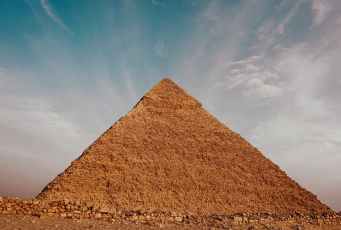
And said, “You know what we need over there? A big old pile of rocks. But not just any old pile, this one should be a pyramid. Bigger than any of those little bent pyramids like my grandpa had built.” Today, we still marvel at the Giza complex. None of that would’ve happened (Aliens notwithstanding) if not for a singular idea and the drive to see it to completion.

The same is true for us, maybe not pyramid building (but hey, if that’s your thing, go for it). I have a vision. Each day, I summon the will to make it a reality. For authors like me, that means sculpting that vision into words on the page. The vision may manifest in waves, first draft, revisions, and a final product. Eventually, the pyramid will reveal itself for all to see.

There are plenty of obstacles between the vision and the pyramid. Life comes up with lots of reasons not to add stones to the pile. The pile itself may need adjusting. The wind may be wrong for my writing mood on any given day. I have to push past all of that, make another deposit on the page, or revise what I’ve piled on before, until the monument can endure without me for millennia.

I don’t actually expect to build a pyramid on the page in my lifetime. My work may not even outlast my lifetime at all. But I intend to add to the pile, adjust as I see fit, until the best monument I can manage emerges. Even if nothing lasting comes from it, the effort will have been worthwhile to me.

Life piles up on all of us…

person using macbook pro on table

Family commitments, housework, actual work, and every other little issue that can come up to keep me from writing does. Like an Author’s Corollary to Murphy’s Law, “Whatever can interfere with writing, will.” Sometimes, being creative and putting my butt in the chair to write feels like the worst use of my time, although I don’t believe that at all.

That was certainly the case with Pitmad today. I planned ahead for it, even made changes on the fly to keep up with it. Traveling at the time the pitch fest started proved to be only a small hiccup. The real show stopper was when I ran out of energy. I missed the last five hours on twitter, because I just couldn’t keep my eyes open anymore.

Still, the day went well, all the appointments were kept. I got some time in to write, and yes, this counts, too! Two out of three pitches went out to Pitmad, along with lots of retweets. I can’t say enough about how the writing community on twitter comes together to lift each other up for pitchfests. Today was no exception.

So yes, life piles up on us all, but it doesn’t have to keep us from what we love. It doesn’t have to interfere with writing, but if it does, breathe. For most of us, there is always tomorrow, thankfully.

There is only one way to learn to write a novel…

macbook pro on brown wooden table

MFA programs can teach you all about writing, the three act structure, character development, setting and so on. What they can’t teach you is how YOU put all the pieces of your novel together. They can’t find your voice for you or discover the themes that are most important to you. That only comes from writing and rewriting your narrative.

That usually means an author’s first book doesn’t work well. For example, it has taken a lot of effort to shape my debut novel, Fantastic America into a sellable book. I’m still tweaking chapters and examining what I can change with critique partners. But none of that is a bad thing. Several authors I’ve talked to threw their fist novel in a drawer hoping for a better second book.

More important to me, from my experience writing a novel. I’ve learned how I write. Last year I learned I can churn out a 100K word novel in two months. I wrote the first 50K words of Midwestern Magicians during Nanowrimo in November. The best lesson of all is that I know I CAN finish a novel length book, easily worth the struggle. No MFA program required.

Not that those programs aren’t a great help, it just isn’t the path I followed. A good program would likely have made my life easier. You have to put your behind in the past, or whatever they said in the Lion King. I’m not the least bit unhappy with where I am now or where my work is headed. The sooner I can share my books with readers, the better.

Speaking of that, Pitmad is today! I’ll be pitching Fantastic America and watching Twitter for likes from agents. Wish me luck or a broken bone, whatever your superstition demands for good fortune. I’ll need it.

Pitmad is tomorrow…

red blue and yellow textile

It hardly seems like the last one was a few months ago. If you aren’t familiar, it’s a pitchfest on twitter for authors to find agents who love their books. I’ll be pitching. If you follow me on Twitter, RT my pitches but save the likes for agents. I got super excited last time for the likes that weren’t agents at all, just interested followers. SIGH – it’s love, but not the hearts I’ll be looking for!

The dead don’t play by the rules…

In Fantastic America, ghosts are an aberration. They exist, but they shouldn’t. Likewise, creatures of necromancy routinely ignore covenants that should keep them from entering the world of the living entirely. That puts a strain on reality no one entirely understands.

There is a lot of poorly understood or plainly unknown activity going on in my debut novel. A portion of the plot is an attempt by all the POV characters in the book to understand what is happening and why. Its obvious monsters, magic, and miracles are popping up around the world, but why? And why now? The answers will come from diligent research, along with a hefty dose of trial and error.

Zombies are a danger that left unchecked would threaten the entire planet. Wraiths, as dangerous as they can be are a limited threat. Ghosts although definitely dead, don’t follow the pattern of the others. In fact, they were here throughout the bleak times of no magic. What sense does any of that make?

The greatest threat from the characters limited understanding, would be someone who could control the dead. Someone who could direct zombies, control wraiths, and expand the list of monsters already dead but still extremely active. That’s the very definition of necromancy.